Long-distance transmission via single-mode fiber optics
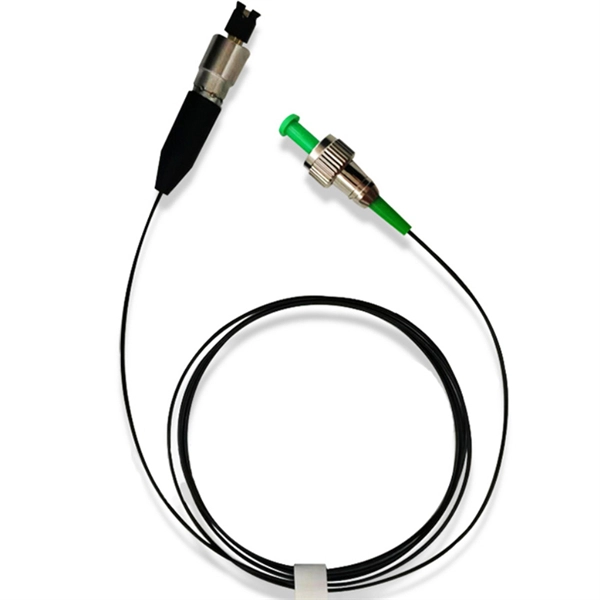
Single-mode fiber optics enable high-speed, long-distance data transmission with minimal signal loss and dispersion, making them ideal for telecommunications and backbone networks.Core PrinciplesSingle-mode fiber (SMF) is designed with a narrow core diameter of 8–10 micrometers, allowing only a single mode of light to propagate through the fiber . This design minimizes signal reflection and dispersion, ensuring that light travels in a straight path with minimal distortion . The core is surrounded by cladding with a lower refractive index, which confines the light via total internal reflection, maintaining signal integrity over long distances .Advantages for Long-Distance TransmissionReduced Attenuation: Single-mode fibers experience significantly lower signal loss compared to multimode fibers, allowing data to travel up to 100 km or more without regeneration . This reduces the need for repeaters or amplifiers, lowering infrastructure costs.High Bandwidth: SMF supports higher frequencies and bandwidths, enabling transmission of large volumes of data at high speeds, typically using laser light sources at 1310 nm or 1550 nm wavelengths .Minimal Signal Dispersion: By allowing only one light mode, SMF reduces modal dispersion, which prevents signal spreading and maintains data quality over long distances .Fiber Types and ApplicationsOS1 Fiber: Optimized for indoor use, capable of transmitting signals up to approximately 2.5 km (1.5 miles) at 1–10 Gbps .OS2 Fiber: Designed for outdoor and long-haul applications, capable of reaching up to 125 miles with high bandwidth . OS2 fibers often feature bend-insensitive designs for complex installations . Single-mode fibers are widely used in telecommunications backbones, metropolitan area networks, submarine cables, and Fiber-to-the-Home (FTTH) deployments .Signal Amplification and ManagementFor distances exceeding the native transmission limit, optical amplifiers such as Erbium-Doped Fiber Amplifiers (EDFAs) or Semiconductor Optical Amplifiers (SOAs) are employed to boost signal strength without converting it to electrical form . Advanced simulation techniques, like the Split-Step Fourier method, are used to model attenuation, dispersion, and nonlinear effects, ensuring optimal system design for long-distance links .Future TrendsEmerging innovations include bend-insensitive fibers, new glass materials like halide or heavy metal oxide fibers, and optimization for 5G networks and high-density urban deployments . These developments aim to further enhance bandwidth, reduce losses, and improve installation flexibility in challenging environments.SummarySingle-mode fiber optics are the preferred solution for long-distance, high-speed data transmission due to their low attenuation, high bandwidth, and minimal dispersion. With proper wavelength selection, fiber type, and amplification, SMF can reliably transmit data over hundreds of kilometers, making it indispensable for modern telecommunications and high-performance network infrastructures .