What specifications are needed for the cable tray hangers
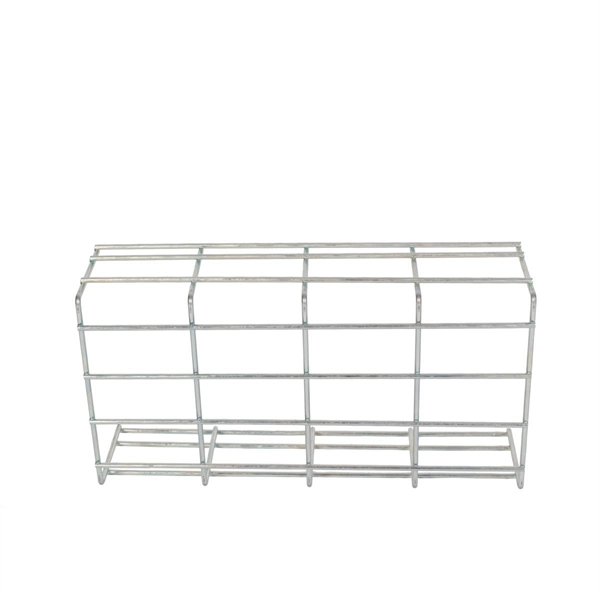
Cable tray hangers must be designed to safely support the weight of cables, withstand environmental conditions, and comply with standards such as IEC 61537 or BS EN 61537.Material and Corrosion ResistanceCable tray hangers are typically made from steel, stainless steel, or aluminum, with finishes such as galvanized, pre-galvanized, or powder-coated to resist corrosion in various environments . Stainless steel hangers, often AISI 316L, are preferred in marine or chemical environments due to their high corrosion resistance . Aluminum hangers offer a high strength-to-weight ratio and natural corrosion resistance, making them suitable for indoor and outdoor installations .Load Capacity and Mechanical StrengthHangers must support the weight of the cable tray and the cables it carries, including additional loads from wind, ice, or seismic activity . Standards such as IEC 61537 specify load testing methods to ensure mechanical strength and stability . The hangers should be capable of withstanding short-circuit forces generated by electrical faults without deformation or failure .Spacing and InstallationProper hanger spacing is critical for structural integrity. Typical support intervals depend on the tray type and load but generally range from 1.5 to 3 meters for ladder trays and 1 to 2 meters for solid-bottom trays . Hangers should be installed perpendicular to the tray, ensuring the tray remains level and aligned. Adjustable hangers or threaded rods are often used to accommodate ceiling, wall, or floor mounting .Compliance and StandardsCable tray hangers must comply with IEC 61537 (international) or BS EN 61537 (UK/Europe), which define construction, testing, and performance requirements for cable support systems . Compliance ensures safety, durability, and compatibility across installations. CE marking or equivalent certification may be required to demonstrate adherence to these standards .Safety ConsiderationsHangers should not be used as walkways or ladders; they are designed solely to support cables .Installation should be performed by competent personnel familiar with electrical and mechanical safety practices .Hangers must maintain electrical continuity if the tray serves as a grounding path .Adequate clearance should be provided for thermal expansion, cable bending radius, and maintenance access .SummaryIn summary, cable tray hangers must be mechanically robust, corrosion-resistant, properly spaced, and compliant with recognized standards. Correct selection and installation ensure the safety, reliability, and longevity of cable tray systems in industrial, commercial, and utility applications .